

Mehr

05.11.2019: Historical Missing Books in the Bavarian Main State Archive and the State Archive Munich
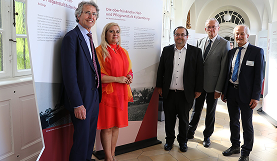
“Get away from the Inn on 27.1.76” or “taken up in Copenhagen on 11.11.75” – two fates of thousands of people from Bavaria who are reported missing every year at the police services. Most missing persons are found alive, individual cases end tragically. Unknown dead and unknown helpless people to register and identify is a difficult task of the police. These processes are coordinated in the field of personal identification of the Bayerische Landeskriminalamt. In August 2019, the Bayerische Landeskriminalamt handed over three large cartons with a total of 57 so-called missing books from 1926 to 1985 to the Bayerische Hauptstaatsarchiv. After a more precise analysis of their origin, the eleven older volumes from the period before 1945 were submitted to the State Archive Munich. These volumes come from a time when the Missing Books were still held centrally by the Munich police office for the whole of Bavaria. The State Archive Munich is responsible for its transmission. Thus, a central source with evidence of all persons missing in Bavaria, unknown dead and unknown helpless persons (VuT) from about 60 years is available for historical research. What was documented on paper in thick volumes by 1988 has been recorded electronically since then – these digital documents will also come to the Bayerische Hauptstaatsarchiv one day. The archiving of the missing books is an expression of the excellent cooperation of the Bavarian police authorities with the Bavarian state archives. Consciousness for the permanent preservation of historically valuable administrative documents shapes the contact between the police authorities and the competent archives. It is now the task of the Bayerischer Hauptstaatsarchiv and the Staatsarchiv München to develop the newly acquired missing books, to treat them conservatively and to make them accessible to interested researchers in accordance with legal requirements. If the National Criminal Office needs the one or the other band again, because all the last missing persons so far could still be clarified, there is the possibility of returning. As part of a press appointment in the Bavarian Main State Archive, the missing books were presented and historically classified. Posted on: 05.11.2019 Related files: Pressemitteilung

27.6.2024: Emergency association Bayern founded
Climate change promotes natural disasters and extreme weather conditions, the consequences of which increasingly affect cultural institutions. Flood 2024 again proves that such damage events are usually no longer possible at local level alone. A cross-border networked infrastructure for the protection of cultural property with appropriate personnel and technical equipment is becoming increasingly important. In order to be better prepared for major damage events in Bavaria, leading cultural institutions join the Bavarian emergency association. First sign of the agreement the Directorate-General of the State Archives of Bavaria the Bayerische Staatsbibliothek the state office for non-governmental museums in Bavaria the Bayerische Staatsgemäldesammlungen the Bavarian National Museum Archive and Library of the Archdiocese of Munich and Freising the archive of the archbishop Bamberg the Archaeological State Collection the Federal Archive for its facility Load balancing archive Bayreuth The Bavaria emergency association supplements the existing regional emergency alliances with a supra-regional level. So far, there are already active emergency alliances in Bavaria at the locations of all state archives, i.e. in Amberg-Sulzbach-Rosenberg, Augsburg, Bamberg, Coburg, Landshut, Munich, Nuremberg and Würzburg. Other local allies are found. Minister of State Markus Blume emphasised on the signing of the agreement: “Prevention, protection and networking are best achieved together: With the establishment of the Bavarian emergency association, cultural institutions from all over the Free State join forces to quickly and extensively protect our cultural treasures. At the heart of the composite is the provision and coordination of a special emergency container for the protection of cultural property. In emergency, expert experts from the association advise and accompany the fire brigade when using the container. Thus, hand-in-hand with the operational forces, a quick, safe and precise protection of our cultural treasures is guaranteed. ‘ In the event of a major damage event, the institutions, which are combined in the Bavarian emergency association, bundle their human, technical and technical resources in order to preserve irreplaceable cultural property from loss and destruction. The first 48 hours decide on the success of a first supply, after this time, mold formation is used in wet objects. Even after that, a recovery is still possible, but the more rapid action is done properly, the better. Objectives of the Bavarian emergency association are procurement and provision of required large equipment and regular training. In the event of damage, members of the association help with recovery and initial care, the subsequent further processing is not the task of the emergency network. For the Bavarian emergency association, as large as possible facilities should be obtained, which run their own workshops or regularly supervise their own large-scale projects in the field of conservation. In this way, the facilities have the necessary expertise in order to also initiate further operational forces in the appropriate handling of crops to be fermented or already havared. A broad distribution of competence was also central. In addition to archives and libraries, large museums are represented and an important competent representative of smaller museums is represented by the state office for non-governmental museums. Whether document, book, painting or sculpture, for any kind of cultural property are specialists on board. The Federal Government supports the 2021 regions affected by floods and heavy rain during the reconstruction and the cultural facilities located there in order to cope with damage. From the funds provided for this purpose, a total of ten emergency containers are purchased with equipment and materials for the protection of cultural goods and kept ready for nationwide use. The main objective of the 10 containers to be distributed over the federal territory is the creation of a networked emergency infrastructure cultural property protection, which can also be combined. For Bavaria is currently running Production of a special container according to the model of the unrolling container of the emergency composite Cologne which has already been proven in use. Starting in the middle of 2025, this roll-off container is ready for cultural goods protection at a logistically easily accessible location in the Munich area for the supra-regional retrieval via the emergency association Bayern. The alarming takes place via the control points of the fire department, the final decision as to whether there is an occasion for a request of the container, meets the emergency association Bayern. The emergency network also alerts the team of the container – tailored to the respective affected cultural goods. Further information: Emergency allies in Germany. The coordinating body for the preservation of the written cultural goods (KEK) takes into account the emergency provision in its funding lines and supports, for example, the purchase of emergency boxes and other equipment or the preparation of emergency plans. An overview of projects funded so far in the field of emergency provision is about KEK's homepage available. Also provided on the homepage of the KEK interactive overview map of all emergency alliances in Germany. The Security Guide Kulturgut (SiLK) offers archives, libraries and museums with a free online tool the possibility of Self-evaluation to raise the level of security of your own institution and to expose vulnerabilities. The joint recommendations for emergency management in archives and libraries of the federal state bodies were recast in 2024 and are here available. More information on conservation in the field Technical information on our homepage. BU 1: Signing of the agreement “Notfallverbund Bayern” on 27. June 2024 in the Directorate-General for State Archives of Bavaria. The group picture shows (from left to right): Dr. Dirk Blübaum and Simone Schön (both: Landesstelle für die Non-State Museums in Bavaria); Archivdirektor Karsten Kühnel M.A. (Federal Archives) Prof. Dr. Johannes Merz (Archive and Library of the Archdiocese of Munich and Freising); Eva Ortner M.A. (Doerner Institute/Bayerische Staatsgemäldesammlungen); Dr. Laura Scherr and Dr. Bernhard Grau (both: Directorate-General of the Bavarian State Archives); Dr. Rolf-Dieter Jungk (Amtschef in the Bavarian State Ministry of Science and Art); Prof. Dr. Bernhard Maaz (Bayerische Staatsgemäldesammlungen); Dr. Frank Matthias Kammel (Bayerisches Nationalmuseum); Prof. Dr. Rupert Gebhard (Archäologische Staatssammlung); Dr. Klaus Ceynowa (Bayerische Staatsbibliothek); Kreisbrandrat Johann Eitzenberger (chairman of the Landesfeuerwehrverband Bayern e.V.); Dipl.-Chem. Dipl.-Ing. (FH) Jürgen Schwarz (Bayerisches Staatsministerium des Innern, für Sport und Integration); Photo: Bayerisches Hauptstaatsarchiv. BU 2: Roll-off container Cultural property protection of the emergency network Cologne; Photo: City Archive Cologne. Created on 27.6.2024

The Constitution of the Kingdom of Bavaria 1818–1918
The exhibition opens a wide panorama of the 19th and beginning 20. century in Bavaria. Not only is the creation of the constitution, but also its further development, which led to an increasing parliamentaryization of the Bavarian monarchy. Individual aspects of constitutional reality round off the picture. One can approach the topic about the intensively explained individual exhibits or thematically about the individual sections of the exhibition. In addition to the prehistory of the Constitution with the Constitution of 1808, “State and Constitutional Code”, “King and Parliament”, “The Way to the State Court”, “Constitutional Reforms in 19th Century”, “Constitutional reforms after 1900”, “problems and break lines of the Constitutional Regulation” and “Constitutional Jubilees”. Here goes to the virtual exhibition.
01.05.2021: Change of office in the State Archive Nuremberg
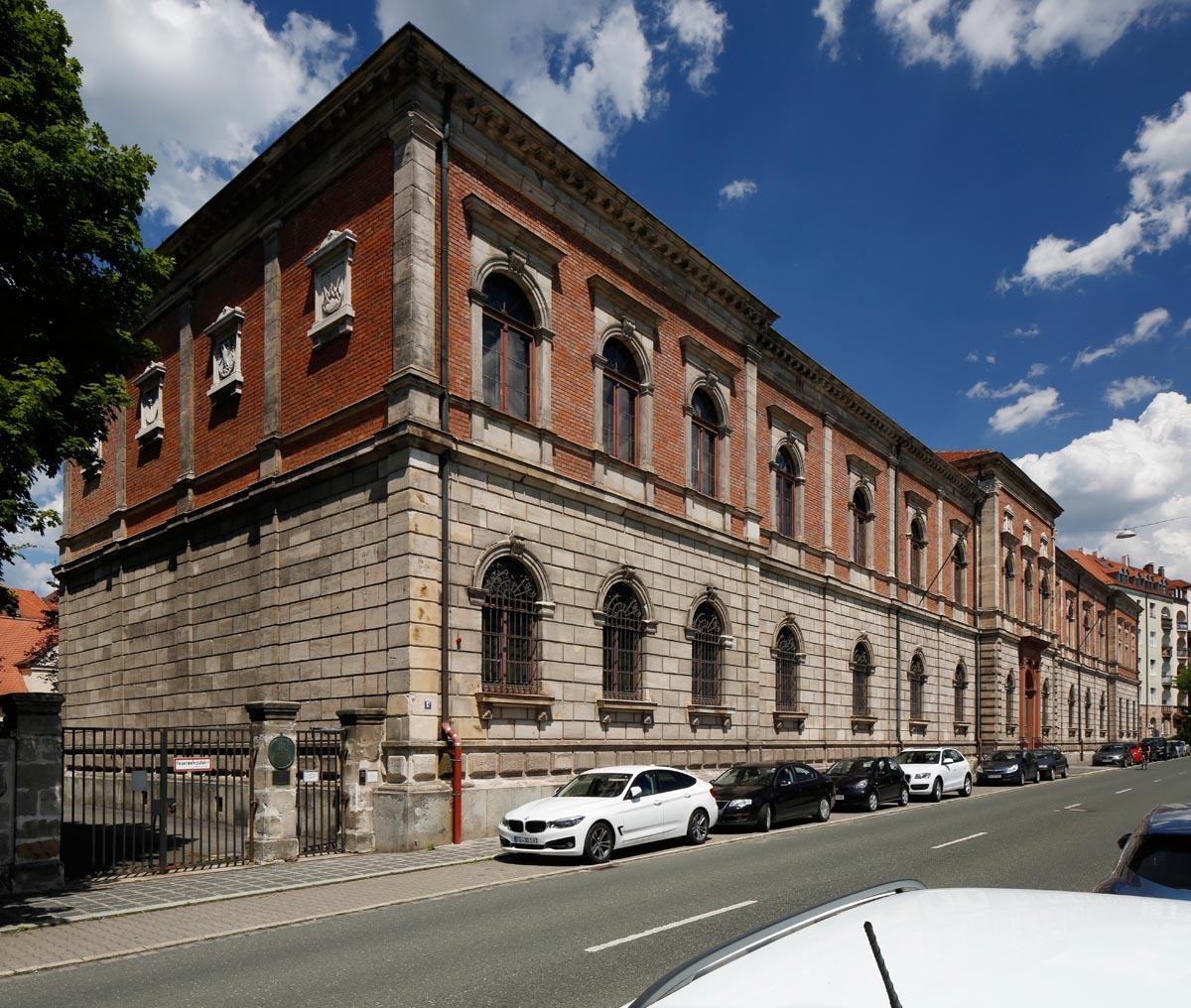
With effect from 1. May 2021 will be archive director Dr. Christian Kruse with simultaneous promotion to Ltd. Archive director appointed as head of the State Archive Nuremberg. He follows Ltd. Archive Director Prof. Dr. Peter Fleischmann, who was appointed 31st January 2021 retired. Prof. Dr. Fleischmann has led the State Archive Nuremberg since 1 December 2012 and returned to the state archive Augsburg and the state archive Munich – in both state archives he had the lead in – to the state archive in which his professional activity began after his training at the Bavarian Archive School. On the occasion of the change of office, Bernd Sibler emphasised: “Archive bridges between our history and the present. Prof. Dr. Fleischmann has built numerous such bridges with his long-standing, dedicated work. With the refurbishment of the State Archives, he also initiated and accompanied a project that will now be one of the tasks waiting for his successor. I am very pleased that with Dr. Christian Kruse we welcome a new archive manager who brings a broad wealth of experience to lead the state archive into the future and thus preserve the memory of our country. ‘ Dr. Christian Kruse, born in Kiel, studied history and German at the universities of Erlangen and Vienna. He received his doctorate in Erlangen with a work on “Franz Friedrich Anton von Sachsen-Coburg-Saalfeld 1750–1806”. From 1991 to 2002 he worked in the Bavarian Main State Archives and from 2002 to 2007 in the State Archives of Augsburg and Nuremberg. From 2007 to 2008, he worked as a permanent representative of the Head of State Archives in Munich, from 2008 to 2018 he was responsible for archive building, stock conservation, publications and public relations in the Bavarian State Archives Directorate-General. He has been head of the Bamberg State Archive since 1 December 2018. The State Archive Nuremberg – apart from the effects of the Coronapandemy – has to cope with great challenges: its headquarters at the Nuremberg Archive Street 17 is refurbished, the offices were moved to Rollnerstraße 14 in 2020, the archives were stored in four locations (external office Lichtenau bei Ansbach, Staatsarchiv Augsburg, Staatsarchiv Landshut, Landeskirchliches Archiv der Evangelisch-Lutherischen Kirche in Bayern). The refurbishment of the State Archive Nuremberg – the first archive-purpose building of the Kingdom of Bavaria, built in 1880 – is expected to last until autumn 2026. The State Archive Nuremberg has approximately 8.2 million archives totaling 36.8 km in its storage. It is responsible for the transfer of all the authorities, courts and prosecutors of the middle and lower level in the Central Franconia government district. For the time before 19. In the century, the State Archives handed over the documents, official books, files and plans of the Principality of Brandenburg-Ansbach, the Reichsstadt Nuremberg, the Hochstift and Domkapitels Eichstätt, as well as the calibertic monasteries, the German Order, smaller Reichsstadt, Reichsritterschaften, the nobility and the Patriziate. Submitted on 29.04.2021, supplemented on 10.05.2021

28.09.2022-08.01.2022: The Prince Bishop moves into town - The beginnings of the Würzburg Residence 300 years ago
The 300. Jubilee of the laying of the foundation stone of the Würzburger Residenz on 22. May 1720 dedicate State Archive Würzburg and Bavarian administration of state castles, gardens and lakes a small exhibition. The exhibition, which was planned for the anniversary year 2020, had to be postponed several times due to the Corona-Pandemie and can therefore be seen with two years delay in the rooms of the Würzburg residence. The Würzburg residence is a building of European rank. As a baroque professional building from a cast, it is a world cultural heritage. Its magnificent equipment came from the need for representation, the consciousness of power and the "Baufieber" of the Würzburger Fürstbischöfe from Schönborn. Thanks to their contacts, the most influential architects of the Holy Roman Empire of the German Nation planned and worked on the construction of the residence, among them Johann Dientzenhofer and the previously unknown engineering officer Balthasar Neumann. The foundation stone laying on 22 May 1720 is the starting point of the exhibition on building history. The stations illuminate the planning and construction of the residence until its inauguration. The artists, architects and craftsmen involved in the construction are presented more closely. Another striking light is directed at the polite life in Würzburg according to the reference of the residence through the court state. 30 exhibits from the collections of the state archive Würzburg as well as some lenders from other facilities (Museum für Franken, Staatsarchiv Bamberg). The Bavarian administration of the state castles, gardens and lakes participates with several large portrait paintings by prince bishops from Schönborn. The exhibition is from 28. September 2022 to 8 January 2023 in Würzburger Residenz, Residenzplatz 2, 97070 Würzburg (with entrance, at the usual opening hours) to see: https://www.residenz-wuerzburg.de>> The state archive Würzburg offers free public tours at the following dates: October 12th, 11 a.m. 26th October, 4 pm November 16th, 11 a.m. 30 November, 3 pm 14 December, 11.00 Registrations under poststelle@stawu.bayern.de or Tel. (0931)35529-40 Further information www.gda.bayern.de (press images in higher resolution can be requested). BR Radio contribution to the exhibition: https://www.br.de/messages/bayern/exhibition-show-anfaenge-und-bau-der-wuerzburger-residenz,TIds9h6>> The exhibition is small exhibition catalogue before: The Prince Bishop is moving into town. The beginnings of the Würzburg residence 300 years ago. An exhibition of the state archive Würzburg in cooperation with the Bavarian administration of state castles, gardens and lakes. Conception and editing: Ingrid Heeg-Engelhart, Hannah Hien, Jens Martin, Klaus Rupprecht u.a. With an introduction by Stefan Kummer (Staatliche Archive Bayerns - Kleine Exhibitions 61), Munich-Würzburg 2020, ISBN 978-3-938831-94-6, 100 pp., zahlr. SW-Abb.; sales price 6,00 Euro Posted on 27.09.2022

"We Ludwig von Gotts Grace" - German-speaking documents Ludwigs des Bayern in comparison
In a new virtual exhibition on bavaricon German-language documents of the Roman King and Emperor Ludwig IV, called "the Bayer" (reg. 1314-1347, Emperor since 1328), are put into the center. In his reign, the importance of German language in the royal firm increases. After his reign, the Latin royal deed became an exceptional case. The exhibition also looks at the development of royal diplomas before and after Ludwig IV and addresses early examples of German texts in the non-royal document. Historically valuable source texts are documented by Ludwigs des Bayern in its pioneering role for the training of the newly high-German language. The virtual exhibition is a joint project of State Archives of Augsburg and the professorship for German literature and language in Bavaria at the University of Augsburg. She was conceived by students from the Departments of History and German Studies at the University of Augsburg under the direction of archival director Dr. Thomas Engelke and professors Klaus Wolf and Thomas Krüger. Here to the exhibition.