

Mehr

01.08.2022: Bayerisches Hauptstaatsarchiv acquires collection to the Bayreuth Festival
Bayerisches Hauptstaatsarchiv acquires collection to the Bayreuth Festival Since its foundation by Richard Wagner in 1876, the Bayreuth Festival has been one of Bavaria's outstanding cultural events with international broadcasting. After laborious years of construction and a phase of ideological segregation by the National Socialists, a new beginning was achieved after World War II. The Bayreuth Festival has been attracting political and social prominence every year since 1951. The Bavarian State Archive has now been able to acquire an extensive private collection of the Bayreuth Festivals from the post-war period. For the post-war period, the collection stock formed from it and from existing material includes all the program books of the Festival, accompanying publications such as the “Festspiel Preview” and the “Festspiel News” and other printed material that often has rarity value. The press sections and photo albums contained are of particular importance. The photo albums not only combine the official role and stage photos, but also complement them with private recordings from the social environment and the inner circle of artistic actors. In addition to the national and partly international press, the press sections also take into account the rest of the German-speaking press. The media echo of the Bayreuth Festival is thus gathered in a number of times – from pre-reporting on current reviews and reports to review. In the cultural sector – unlike in politics – there are often few official sources and usually fewer private sources. In addition, discourses were often medial. Therefore, the delivery of press in the cultural sector is of particular quality. The dense delivery to press clips in the Bayreuth Festival Collection is therefore a special lucky case. The documents were collected by Willy Wesemann (1910–1985). The violinist was a member of the Festival Orchestra for decades and was therefore closely related to all artistic participants. As an enthusiastic collector, he took great effort. During the festive season, he referred to the most important press organs himself and advertised them for his collection, as well as photographed himself. All press cutouts were finely cut, provided with source information and stored clean. His whole family was involved in these works. His daughter Astrid Zimdahl-Wesemann has now left the collection of about three shelves to the Free State of Bavaria. The new “Bayreuth Festival Collection” complements the existing collections of the Bavarian Main State Archive with reference to the Bayreuth Festival. In addition to the state tradition mainly from the Ministry of Culture, this is mainly the two estates of Wieland and Wolfgang Wagner. In their time, both of them were decisive for the Bayreuth Festival and the opera world as a whole. The Bayerische Hauptstaatsarchiv is the central archive of the Free State of Bavaria and one of the largest archives in Germany. In addition to official documents, it also retains non-state archives. These include in particular estates of important personalities and collections.

15.01.2020: Reduction of two medieval documents from the USA - Press discussion on 15th January 2019 in the State Archive Nuremberg
Wednesday, 15. January 2020 (15.00) two documents missing since the end of World War II were returned to the State Archive Nuremberg by the Federal Foreign Office. The two documents from 1418 showed up in the USA in 2019 in the estate of a former US soldier and were able to be returned to Nuremberg by the Federal Foreign Office. In the Second World War, the State Archive Nuremberg held its most valuable collections due to imminent air raids at numerous mountain sites. In total, almost 17 kilometres of archived goods were located in 32 different locations around approx. 80 km around Nuremberg. One of the depots was in the castle Sandsee (now district Weißenburg-Gunzenhausen). There were 137 boxes with late-medieval documents. Immediately after the end of the war, this depot was plundered, more than 70 parchment certificates disappeared. Already in 1987 and 1991, a total of 20 missing documents came from the USA back to Nuremberg. With the new return of two documents, the hope is that further missing pieces will find their way back to the State Archive Nuremberg. Submitted on: 15.01.2020 Related files: Pressemitteilung
Nuremberg succession processes 1946–1949: Digitization projects started
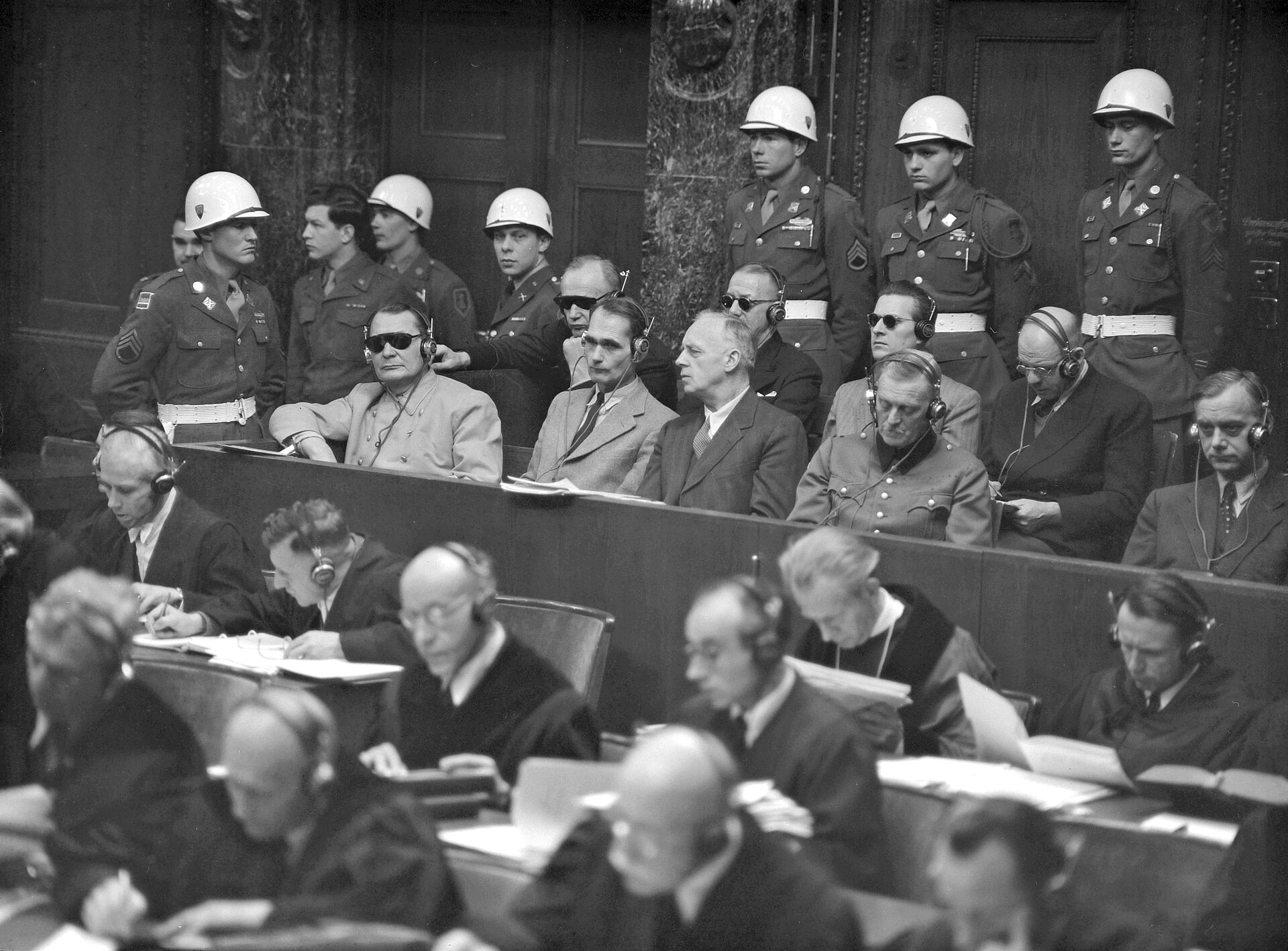
Immediately after the Nuremberg trials against the war criminals of the Second World War, the so-called Nuremberg succession processes started. In contrast to the main war criminal proceedings before an International Court of Justice, these proceedings, which took place in Nuremberg between 1946 and 1949, were negotiated exclusively before American military courts. 185 senior lawyers, medical professionals, industrialists, SS and police leaders, military, civil servants and diplomats were charged in a total of 12 trials. The processes showed to what extent the German leadership layer had contributed to the power system of the Nazi rule of violence. Of the 185 defendants, 24 received the death penalty, 20 were sentenced to life imprisonment, 98 received several years of imprisonment. 35 of the accused were acquitted. In the 1950s, pardons led to all convicted NS criminals being released from custody until 1957. Of the 24 death sentences, 13 were actually executed. New standards in the scientific work-up of the Nuremberg succession processes Over the course of the processes, approximately 2.5 million sheets of process files were produced, which are stored in the original state archive in Nuremberg: statements by witnesses, indictments, stenographic records, defence documents, interrogation protocols and other official and private documents. With the project “Digital Nuremberg Military Tribunals” (DigiNMT), BAdW, FAU and the Directorate-General of the Bavarian State Archives enable the scientific work-up of the Nuremberg succession processes. The aim is to fully digitize, develop structured and make accessible on an interactive platform globally the process files that are threatened by poor paper quality. This contributes significantly to the conservation and preservation of the original documents. “DigiNMT is an innovative lighthouse project for digital humanities,” says Christoph Safferling, owner of the FAU Chair of Criminal Law, Criminal Procedure Law, International Criminal Law and International Law and one of the project leaders. “The aim of the project is to enable researchers and interested parties to systematically view and analyze the whole of the documents in an interdisciplinary manner.” By combining artificial intelligence (AI) and natural language processing (NLP) with legal and historical approaches, the previously fragmented research on the succession processes is to be given a new basis. “The Digital Humanities are continuously strengthened as a research focus of BAdW. I am pleased that this project can help to significantly promote legal and historical research into the Nuremberg follow-up processes,” says Academy President Markus Schwaiger. Research data development The project focuses on the digital presentation of the historical files, which are prepared in three stages of development: from digitization to confiscation to bilingual commentary. “With the digital provision of this enormous database complex, research and the public are opening up new and significantly improved possibilities of access and evaluation,” says Director-General Bernhard Grau (Directorate-General of the Bavarian State Archives). With the help of AI-based analyses, new findings on biographical networks, legal accounting models and the dynamic processes of post-war justice are to be gained. Particularly innovative is the possibility to create interactive visualizations that make complex relationships between actors, evidence and legal concepts visible. Importance of international research The digital platform aims to provide open access to researchers around the world and inspire new research questions. “The Nuremberg succession processes not only mark a legal milestone but also historically a milestone,” explains Simone Derix, owner of the FAU Chair for Latest History and Time History and also project manager. “With DigiNMT, we create the basis for analysing their importance for the development of international criminal law and the work-up of Nazi crimes at a new depth. ‘ The project follows the FAIR and CARE principles – thus ensuring the traceability, interoperability and reusability of the data, but also taking into account ethical and collective responsibility aspects. The data architecture also ensures the connectivity for future research projects and enables cooperation with international institutions. Project “Digital Nuremberg Military Tribunals” (DigiNMT) Duration: 2024 to 2026 Financing: Bavarian Academy of Sciences Project partner: Bavarian Academy of Sciences, Friedrich-Alexander-Universität Erlangen-Nürnberg, Directorate-General of the State Archives of Bavaria, International Academy of Nuremberg Principles, State Archive Nuremberg Contact: Prof. Dr. Christoph Safferling Friedrich-Alexander-Universität Erlangen-Nürnberg | Department of Law E-mail: Str1@fau.de In order to launch the digitalization project, the Bavarian State Archives are presenting the digitalisates of the process documents of the Nuremberg succession process Case 11 (also known as “Wilhelmstraße Process”); ‘Ministries Trial’ is available through their finder database. The process lasting from the end of 1947 to April 1949 is, in addition to the Nuremberg Main War Crime Process ("International Military Tribunal"), the most extensive process of the thirteen Nuremberg trials and was directed against the "second series" of the NS regime, including several state secretaries, high SS leaders and economic managers. You will find the Digitalisate on Case 11 in finder database of the Bavarian State Archives. Figures 1. Photography accused Nuremberg trials, recording Raymond D'Addario, 1946, municipal archive Nuremberg 65/I Nr. A65-I-RA-12. Two. Stenographic Protocol 20.12.1947 pp. 1 - 15, State Archive Nuremberg, Nuremberg Processes, KV Processes, Case 11 (= Weizsäcker Process) A 1. 3. Opening Statement for Ernst von Weizsäcker von Warren E. Magee and Hellmut Becker from June 1948, State Archive Nuremberg, Nuremberg Processes, KV Processes, Case 11 (= Weizsäcker Process) X1. Created on 27.01.2025

21.06.2022: Cooperation Agreement between the University of the Federal Armed Forces of Munich and the Directorate-General for State Archives of Bavaria signed
21. In June 2022, the President of the University of Bundeswehr Prof. Dr. Merith Niehuss, whose Vice President Prof. Dr. Uwe Borghoff and the Director-General of the State Archive Dr. Margit Ksoll-Marcon signed a cooperation agreement at the University of the Bundeswehr Munich. The aim is to co-operate the Institute of Software Technology and the datArena of the University of the Bundeswehr Munich with the state archives of Bavaria in data backup and long-term data storage. The contract includes the cooperation of the two institutions with the organization and support of student projects and internships in order to close students with forms, methods and instruments of archival information management, as well as to give insights into the field of archives and the challenges of digital long-term archiving. Focus: Recovering old records and long-term archiving The intention of the agreement is that both partners develop joint projects, scientific meetings and workshops. For this purpose, the stock of the Bavarian State Archives can be used for research purposes by students and lecturers of the Institute for Software Technology. Research projects as well as project or master's work are intended primarily to restore and interpret older data stocks of the Bavarian State Archives, document formats and digital long-term storage and long-term preservation. Software solutions that can be created in research and used for the purposes of archiving are released for use by the State Archives. “The cooperation with the state archives is of particular importance for the University of the Bundeswehr Munich and the work in the datArena. This gives our researchers access to authentic and historically valuable data material as well as close personal contacts to internationally identified experts of long-term digital archiving,” explains Prof. Dr. Borghoff. Dr. Ksoll-Marcon said: “Enge contacts to the Institute of Software Technology at the University of the Bundeswehr have existed for many years and are intensified by this cooperation. The aim is to make research data readable and usable and to further develop the necessary technologies." The datArena: A forum of encounter The signing of the cooperation agreement took place in the new premises of the datArena on the grounds of the University of the Bundeswehr Munich. The datArena is a teaching, research and exhibition centre that conveys between technical, cultural and social history and will also offer researchers, students and the public a forum for encounters. The datArena was founded jointly by Prof. Dr. Borghoff and John G. Zabulitzky. At present, a move on the grounds is completed. In addition to valuable, technology-historical, representative electronic computers, the datArena houses a software archive of international rank and one of the largest collections of historical digital media. Since the software and media can be used on functional devices from the respective era, historical software and digital documents can be brought back to life. Thus, datArena offers an excellent infrastructure for research in the field of digital long-term archiving and preservation of digital cultural heritage. In conjunction with the datArena, courses and internships of the Bayerische Archivschule will be organized and conducted in the future.

09.03.2020: Selected documents on "Communication" - Tag Archives at the Coburg State Archive on Monday, 9th March 2020
The 10th day of the archives will be held on the first weekend of March. Several hundred archives in Germany open the doors to their treasury chambers and show their work with historical documents. Opening hours on Monday, 9 March 2020: The State Archive Coburg presents selected documents from its collections on the topic ‘Communication’ means: Famous letter writers like Martin Luther more of the written form of communication Beginning of 20. In contrast, some Coburg pioneers experimented with the Communication via radio and radio waves And how did the Communication at the German-German border in the period of the Cold War? Subsequently, a public tour takes place through the magazine of the State Archive. Contact person Dr. Alexander Wolz, Birgit Hufnagel, Email: poststelle@staco.bayern.de Submitted at: 06.02.2020

14.3.-4.4.2023: Cannon bells. Bell seizure and restoration in Bavaria 1917–1922
The 14th. March 2023 became the small exhibition “Glocken zu Kanonen. Bell seizure and restoration in Bavaria 1917–1922” opened in the Bavarian Main State Archive. The exhibition was developed as part of the current archiving training for the 3rd level of qualifications at the University of Applied Sciences in Bavaria (HföD). Bells have shaped our everyday life as a clock generator for centuries. In their ornamental and sound art, they testify not only to the worship of God and the saints, but also to the craftsmen of their founders. In the First World War, about one third of the Bavarian bells were crushed and melted to cover the metal requirements of the armaments industry. Despite these massive losses, the “Glockenland Bayern” succeeded better than other countries of the German Reich to preserve its bell stock as far as possible and in particular to preserve historical bells from destruction. The exhibition is dedicated to the processes and actors of bell events during the First World War in Bavaria. Finally, the question of state compensation or restoration of bells after the end of the war. The exhibits originate mainly from the collections of the Bavarian Main State Archives, the city archives Augsburg and Rosenheim have provided digitalisate. accompanying exhibition is a leaflet available on this page under 'Family files' and under https://www.gda.bayern.de/publikationen/lehrausstellungen-der-bayerischen-archivschule/ available for download. The exhibition can be visited from 14 March to 4 April 2023 in the Bavarian Main State Archives (Treppenhaus, 1st OG), Schönfeldstraße 5, 80539 Munich. Opening hours: Monday to Thursday 8.30 – 18.00, Friday 8.30 – 13.30. Guided tours for groups can be found under oeffentigkeitsarbeit@gda.bayern.de to be agreed. Posted on 13. March 2023