

Mehr

29.06-30.10.2020: "The most burning of all social questions." Local housing policy between 1918 and 1954 in Munich, Nuremberg, Erlangen
On Monday, 29. June 2020, became the small exhibition in the Bavarian Main State Archive “The most burning of all social questions” Local housing policy between 1918 and 1954 in Munich, Nuremberg, Erlangen open. The exhibition was opened in the course of training in the preparatory service 2018/2020 for the entry into the 4th Qualification level of the field of education and science, specialist focus on archives, at the Bavarian Archive School. Dr. Thomas Gilgert, Johannes Hasselbeck and Andreas Schenker are the editors of the exhibition. Lack of housing and rising rents in many cities lead to the housing issue of many today as a new social issue or even as the social issue of the 21st. It is seen in the century. Concentrated housing also promotes the spread of diseases, as the Covid-19-Pandemie is currently devastating. These phenomena are not new. Already in the pre-modern era, not all people had a roof over their heads. At the latest since the explosion in the urban centers, which begins with industrialization and continues to take place today, supply and demand are mostly disparate. The small exhibition looks back at the local housing policy in three crucial political phases in Bavaria: the Weimar Republic, the National Socialism and the early post-war period. For each of these periods, a city which was of particular importance for Bavaria at the time as it was today and whose housing policy was thus also exemplary for others is taken out. The exhibition begins with Munich as the most populous place and Bavarian capital for the period of the Weimar Republic. It follows Nuremberg, the old industrial heart of Bavaria and special show stage of Nazi propaganda (cf. also Exponat 2.2 in the online finder MF 22: "Representation of state forest grounds for the establishment of a working settlement on the outskirts of Nuremberg"). In the post-war period, the exhibition focuses on Franconian achievements, until then a middle city with a Protestant-small-bourgeois character, which developed into an educational, industrial and prosperity centre after 1945. On the basis of these examples, two democracies and a totalitarian dictatorship, the structural features of which are also found in local housing policy, are dealt with consecutive but conceivable different temporal contexts: In the Munich of the Weimar Republic, the increased importance of public service provision becomes clear, the völkian blood and soil ideology of the NS regime manifests itself in its Nuremberg home and small settlements, and an essential factor of the earned lack of housing in the post-war period were the many refugees and displaced persons arriving there. On the other hand, there are specific local peculiarities of the three places: The conservative expression of Munich's urban policy is more traditional. The self-conception of Nuremberg as a “city of the Reichsparteitage” is reflected in the offensive appearance of Mayor Liebels. Erlangen’s urban structure, which remained largely undisturbed in the war, resulted in an unusually strong settlement of various groups, which now needed a new home. With this concept, the exhibition wants to sharpen the view of the questions of the present by illustrating different reactions that the phenomenon of housing shortages had in three different contexts. The small exhibition combines about 40 exhibits, mainly from the municipal archives Nuremberg, Munich, Erlangen and the Bavarian Main State Archive. It is from 29 June 2020 to 30 June 2020 October 2020 (extended) in the main building of the Bavarian Main State Archive (Treppenhaus, 1st OG), Schönfeldstraße 5, 80539 Munich. Opening hours: Monday to Thursday 8.30–16.00 hrs., Friday 8.30–13.00 hrs. (Sa, So and on holidays closed) Free admission. Please note the applicable hygiene rules in the building of the Bavarian Main State Archive (including the duty to carry mouth-nut protection). Guided tours cannot be offered. Further information at www.gda.bayern.de (press images in higher resolution can be requested). The exhibition is a small Exhibition catalogue (ISBN 978-3-938831-95-3, protection fee 3.00 Euro). Submitted on: 07.07.2020

09.11.2019: "Der Reichswald - Holz für Nürnberg und seine Dorf" - Exhibition at the Staatsarchiv Nürnberg
The State Archive Nuremberg shows from 9 November to 20 December 2019 the exhibition “The Nuremberg Reichswald – Wood for Nuremberg and its villages”. The exhibition was prepared by the State Archive Nuremberg together with the Franconian Freilandmuseum Bad Windsheim. Wood as an important and renewable raw material was already significant in the Middle Ages. 14th and 15th The city of Nuremberg secured the rights to the large forests around the city. Two “forest offices” were responsible for the administration, which controlled the wood consumption of the subjects. Not only the firewood cover was regulated, but also timber had to be applied. To save wood, more stone was used for building. The written delivery of the forest offices Lorenzi and Sebaldi in the state archive Nuremberg includes a total of 83 shelves. In the documents there are around 5,300 mostly coloured construction plans of farmhouses, stables and barns, fences, mills and furnaces from the 16th to the end of the 18th century. Century – a unique treasure in Germany. After several years of work, these files are now opened and all plans are digitized. The plans document the appearance and change of villages, mansions and mills in the “Old Landscape”. What is hidden from exciting stories behind the files of a rich city authority shows examples of black structures, unauthorized woodwork and the devastations of the Thirty Years War. In addition to files and the most beautiful plans, the exhibition features house models and typical woodworking tools from the collections of the Franconian Freeland Museum. The illustrated catalogue „The Reichswald – Wood for Nuremberg and its villages“ of the Franconian Freilandmuseum Bad Windsheim (2013) of 217 pages is available at the price of 13 €. The Reichswald – wood for Nuremberg and its villages Exhibition from 9 November to 20 December 2019 open each Wednesday to Saturday, 13 am to 6 pm Free admission Address: Staatsarchiv Nürnberg / Archivstraße 17 (near Friedrich-Ebert-Platz) / 90408 Nürnberg Email: poststelle@stanu.bayern.de / Phone: (0911) 93519-10 Submitted on: 09.11.2019 Related Files: Pressemitteilung
Cooperation of the State Archives of Bavaria with the Arolsen Archives
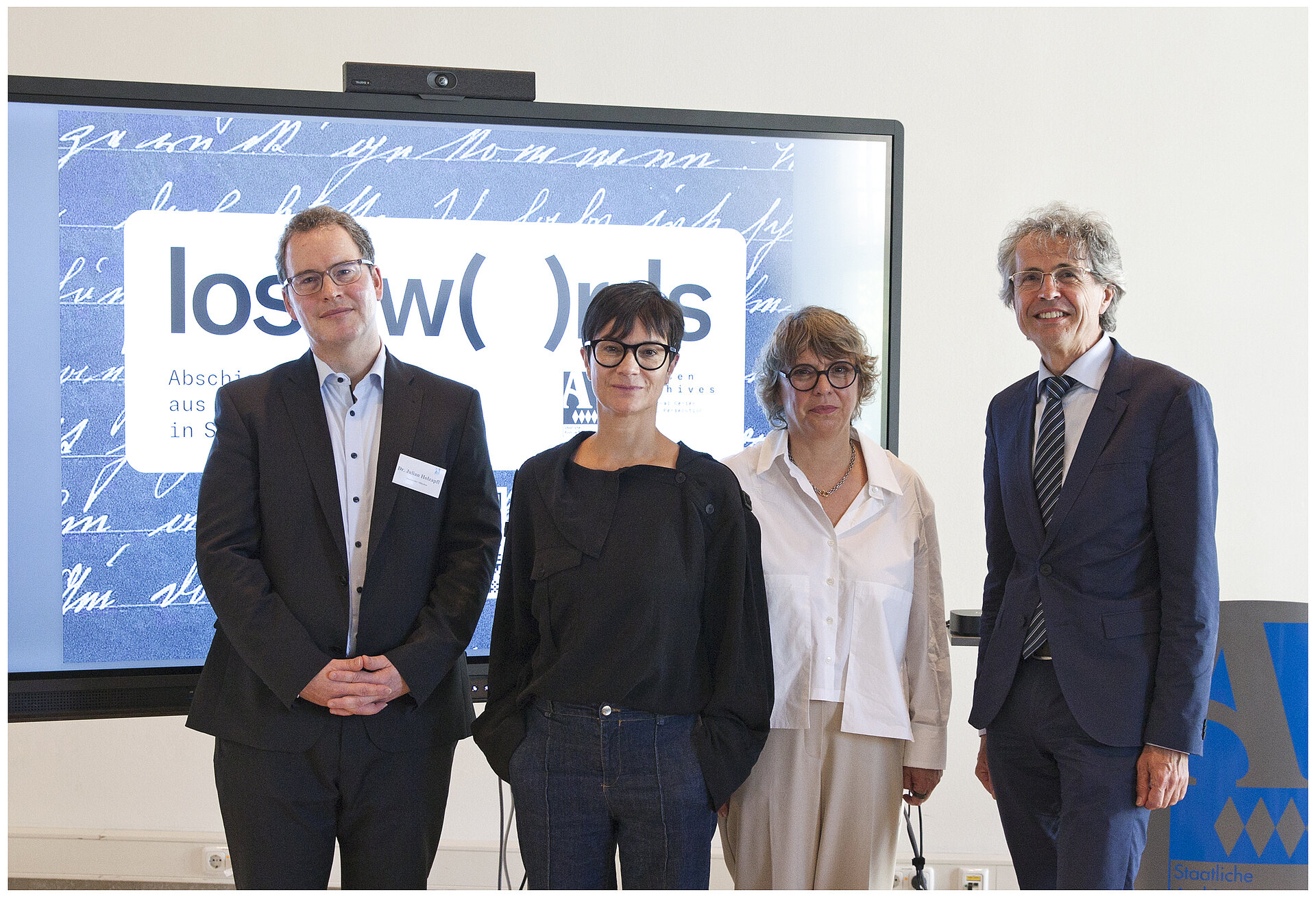
The detention centre in Munich-Stadelheim acted as a “central detention centre” in the Nazi justice system and is one of the main places of the Nazi injustice in Munich with over 1000 known executions by 1945. The 844 so-called execution files of the JVA München-Stadelheim, which have been stored in the State Archive Munich since 1975, contain more than 50 unsubscribed letters from execution candidates to particularly close persons. The then prison administration and the detention centres held these letters back. The execution files are freely accessible to all scientific and private research projects, the distortion information is available online via the Finder database of the State Archives of Bavaria. In order to take account of the particular importance which the execution files or the suicide letters of the executed still have, as sources of history for the NS injustice, but also as personal evidence for the descendants of the executed, the files were systematically checked, digitized and the original letters mentioned were identified. The Arolsen Archives are the international centre of Nazi persecution with the world's most comprehensive archive on the victims and survivors of National Socialism. They specialize in tracking the biographical traces of NS victims up to their relatives living today. In the case of execution victims from Munich-Stadelheim, these traces lead not only to German, but above all to Polish and French families. The aim of the cooperation agreed in April 2025 is the networking of the files of the State Archive Munich with the transfer of Arolsen Archives to 17.5 million victims of National Socialism. The Arolsen Archives will try to identify addressees of the suicide note and other survivors of the executed, to contact them and to hand them copies of the original letters on request. The project is accompanied by a conciliation campaign and public events. This connects the letters beyond the existing free archival accesses. First results were presented at the press conference on 23 July and the project progress was explained. More information about the Arolsen Archives can be found here. BU 1 v.l.n.r.: Dr. Julian Holzapfl, Head of the State Archive Munich; Floriane Azoulay, Director of Arolsen Archives, International Center on Nazi Persecution; Dr. Anke Münster, Arolsen Archives, International Center on Nazi Persecution, Head of Public Relations/ Project Management; Dr. Bernhard Grau, Director General of the Bavarian State Archives BU 2 v.l.n.r.: Dr. Bernhard Grau, Director-General of the Bavarian State Archives; Floriane Azoulay, Director of Arolsen Archives, International Center on Nazi Persecution; Dr. Anke Münster, Arolsen Archives, International Center on Nazi Persecution, Head of Public Relations/ Project Management; Dr. Julian Holzapfl, Head of the State Archive Munich BU 3: Dr. Julian Holzapfl, Head of the State Archive Munich presents original files Posted on 23.07.2025.

17.10.2022-13.01.2023: Hitler's train to Coburg - The German Day of 1922
On 14 and 15 In October 1922 Adolf Hitler and with him 650 SA men appeared in Coburg for the first time in a larger style outside Munich. The gathering of various vaterland and völk associations was ultimately dominated by Hitler’s SA, which, after violent confrontations with local emonstrators, claimed to have liberated Coburg from the “red terror” of the workers. The event took great attention throughout Germany and was anticipation of the crisis year 1923, at the end of which the Hitler coup stood. As a “mark of movement” it should be permanently inserted into the party myth of the NSDAP. The exhibition of the three institutions aims to illuminate the circumstances of Hitler's appearance in Coburg, to present important protagonists and scenes and to highlight the importance of the event for Coburg and the history of the NSDAP. Location: Foyer des Staatsarchiv Coburg, Herrgasse 11. The entrance is free. Opening hours: Mo-Do 8-16, Fr 8-13.30; Duration 17.10.2022-13.1.2023; closed 26.-30.12.2022, 6.1.2023. Submitted 10.10.2022, updated 21.10.2022

15.09-20.11.2020: "Brief and seal - credibility and legality, yesterday and today"
What is it about? What to see? The exhibition focuses on legal and legal capacity. Who had legal capacity at what time? Who was allowed to seal, draw, sign? Who broke the staff over when? What are the legal areas? Why do we even need legal documents? The time frame of the exhibition extends from the Middle Ages to the present. 90 special archives from all regions of Bavaria can be seen. The exhibition is divided into three major areas: Legal symbol Forms of certification Invalidation. The exhibition is a Catalogue No all exhibits are shown in colour: 61: G l a u b w i t i t i t i n d r e r e r e r e r e r e r e r e r e r e r e r e r e r e r e r e r e r e r e r e r e r e r e r e r e r e r e r e r e r e r e r e r e r e r e r e r e r e r e r e r e r e r e r e r e r e r e r e r e r e r e r e r e r e r e r e r e r e r e r e r e r e r e r e r e r e r e r e r e r e r e r e r e r e r e r e r e r e r e r e r e r e r e r e r e r e r e r e r e r e r e r e r e r e r e r e r e r e r e r e r e r e r e r e r e r e r e r e r e r e r e r e r e r e r e r e r e r e r e r e r An exhibition of the Bavarian State Archives in the Bavarian Main State Archive, Munich 2020. Idea: Margit Ksoll-Marcon. Exhibition and catalogue: Laura Scherr, Elisabeth Weinberger, Andreas Nestl, Ulrike Claudia Hofmann, Klaus Rupprecht, Andreas Schmidt and Team. With an introduction by Andreas Nestl and Maria Rita Sagstetter, Munich 2020, ISBN 978-3-938831-93-9, 220 pages, more numerous. Color abb. - Yeah. € 16.00 Blog parade #femaleheritage The exhibition is unfortunately closed. With selected exhibits we participate in the blog parade of Monacensia for "Women and Remembrance Culture" under #femaleheritage. Find all posts about Blogparade H I R. For example, we are going to ask how e n e n e n e n e n e n e n e n e n e n e n e n e n e n e n e n e n e n e n e n e n e n e n e n e n e n e n e n e n e n e n e n e n e n e n e n e n e n e n e n e n e n e n e n e n e n e n e n e n e n e n e n e n e n e n e n e n e n e n e n e n e n e n e n e n e n e n e n e n e n e n e n e n e n e n e n e n e n e n e n e n e n e n e n e n e n e n e n e n e n e n e n e n e n e n e n e n e n e n e n e n e n e n e n e n e n e n e n e n e n e n e n e n e n e n e n e n e n e n e n e n e n e n e n e n e n e n e n. We put a S e r e r e r e r e r e r e r e r e r e r e r e r e r e r e r e r e r e r e r e n d a n t a sfrom 1921 and explain what Mr Ellen Ammann, Aoisia Eberle Klara Barth, has disturbed. Submitted on: 09.03.2020, updated on 20.11.2020
15.01.2019: Introduction of Archive Director Dr. Christian Kruse as new head of the Bamberg State Archive
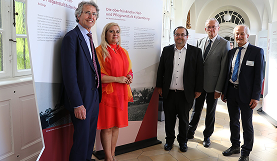
Tuesday, 15th In January 2019, Dr. Christian Kruse, Director General Dr. Margit Ksoll-Marcon, was officially introduced as Head of the State Archives. Ms. President of the Government Heidrun Piwernetz has spoken a greeting. Dr. Christian Kruse was effective from 1. December 2018 appointed Head of the Bamberg State Archives. He followed archive director a.D. Dr. Stefan Nöth, who has been the state archive since 1st. August 2006 and retired as of 31 August 2018. Christian Kruse, born in Kiel, studied history and German at the universities of Erlangen and Vienna. He received his doctorate in Erlangen with a work on “Franz Friedrich Anton von Sachsen-Coburg-Saalfeld 1750–1806”. After training as a scientific archivist at the Bayerische Archivschule, he worked from 1991 to 2002 in the Bayerischer Hauptstaatsarchiv and from 2002 to 2007 in the Staatsarchiv Augsburg and Nuremberg. From 2007 to 2008, he worked as a permanent representative of the Head of State Archives in Munich, from 2008 to 2018 he was responsible for archive building, stock conservation, publications and public relations in the Bavarian State Archives Directorate-General. Dr. Kruse represented the state archives of Bavaria in federal-counter-gremien. The state archive Bamberg can inaugurate a modern magazine building in the next few months. Networking in the region with archives, authorities, courts, educational institutions and schools is a central task that will be intensified.
"The German Reparation"
How did the Federal Republic of Germany compensate for the victims of unprecedented NS crimes? How was robbed property returned? And are committed crimes even “make good again”? These and other questions are discussed in the new, three-part podcast “The German Reparation”, which is now available online. In three episodes, central aspects of restitution such as restitution and compensation are at the heart of NS persecuters, as well as dealing with the so-called “forgotten victims” using the example of Sinti and Roma. Experts from science and society, along with podcast host Nora Hespers, also on the basis of historical documents from the Federal Archives, illuminate the backgrounds of reparation. The podcast appears in a German and English version. “The German Reparation” was created on behalf of the Federal Archive for the online theme portal “Reparation of National Socialist Unright”. Since 2022, the thematic portal initiated by the Federal Ministry of Finance and designed by the Federal Archives has been providing central access to millions of files of the German reparation policy and is continually being developed into a comprehensive search and information site which, in addition to archive contents, also offers background information, podcasts and research aids. The theme portal is implemented together with the Landesarchiv Baden-Württemberg, the Leibniz-Institut FIZ Karlsruhe and the portal Deutsche Digitale Bibliothek. The new podcast will be published on the 18th anniversary of the ratification of the Luxembourg Agreement on the so-called ‘Reparation of National Socialist Unright’. March 1953. In this agreement, the Federal Republic took responsibility to the State of Israel for the crimes committed in Nazism, especially to Jews. In the first podcast sequence “A question of property – between robbery and law” the refund of stolen property is at the centre of attention. Historian Jürgen Lillteicher (Director of the Allied Museum Berlin) talks about the start of reparation. Jurist Benjamin Lahusen (University of Frankfurt an der Oder) takes a look at the court halls at that time, and the provenance researchers Susanne Kiel and Kathrin Kleibl (LostLift database) report on the handling of the moved goods persecuted who had been confiscated in ports during war outbreak. The second sequence “A question of the territory – the view to the west” looks at the compensation of Nazis in Western Europe. Historian Tim Geiger (Institut für Zeitgeschichte München-Berlin) reports on the foreign policy history of reparation, and Nicole Immler (University of Humanistic Studies in Utrecht) explains how reparation was carried out abroad. Britta Weizenegger (Landesamts für Finanz Rheinland-Pfalz) also reports how a reparation office works today. In the third episode “Camp for Recognition” is about the reparation for the Sinti and Roma persecuted in the NS period. They are representative of the so-called “forgotten victims” (such as homosexuals, so-called “Asocial”, “vocational criminals”), whose suffering was not recognized and compensated for decades after the Nazi terror. “The German Reparation” hosted the president of the Central Council of the Germans Sinti and Roma, Romani Rose, the President of the Federal Court of Justice, Bettina Limperg, and Markus Metz from the Bavarian National Association of Sinti and Roma. Link the podcast Topics "Reparation of National Socialist Unrightness" Posted on 14.03.2025

07.03.2020: History of the Post in the Oberpfalz - Tag der Archive im Staatsarchiv Amberg am 7. March 2020
On the first weekend of March the 10th will be German. Tag Archives organized. This year he is entitled “Communication: From the Depesche to the Tweet”. Several hundred archives in Germany open the doors to their treasury chambers and show their work with historical documents. Lectures on the history of the post in the Oberpfalz (10-13) Welcome (Dr. Maria Rita Sagstetter, State Archive Amberg) The post in the Oberpfalz. Formation - Structures – Formation (Dr. Martin Dallmeier, Regensburg) Stocks on post history in the Amberg State Archive (Dr. Till Strobel, Amberg State Archive) Introduction to Exhibition “History of Post in the Upper Palatinate in 19th and 20th Century’ (Jochen Rösel M.A., Staatsarchiv Amberg) Guided tour of the Amberg State Archive (13 – 2 pm) Participation in the leadership is also possible regardless of the attendance of the lectures. Exhibition It is also possible to: Exhibition “History of Post in the Upper Palatinate in 19th and 20th Century‘ are visited. This is also the 09.03. to 09.04.2020 open during the opening hours of the State Archive. Submitted at: 06.02.2020

04.07.2019: Digital cultural mediation – “Small archival studies” unlocked by the state archives of Bavaria - online presentation of 100,000 digitized archives with a total of 3.5 million images on the homepage
As a new e-learning module on the homepage of the Bavarian State Archives, the 4th July 2019 at 10.00 a.m. the “Small Archives” presented and unlocked (https://www.gda. bayern.de/service/archivalienkunde/). The module Prof. Dr. Joachim Wild, Director of the Main State Archive a.D., has worked out the subject “Archival Studies” for 30 years at the Bavarian Archive School, the central educational institution for archivists in Bavaria. Currently, the state archives of Bavaria store well 47 million originals from 777 to today. If you put all archives together, you could easily bridge the distance from Munich to Nuremberg. About the homepage and the finder database (https://www.gda.bayern.de/service/finding agent database/) are currently 100,000 archives Digitalisate available. Since most archives comprise several pages, this results in the fair number 3.5 million available images. These quantities already make it clear that any form of digital access to archives will always be a part of the written tradition of Bavaria. The focus is on the state archives of Bavaria, therefore, the digital collection of directories and development information. This information is not only available through the homepage, but is also fed via interfaces into important portals such as the Archive Portal D and from there into the EUROPEANA. Another focus is the digitization of audiovisual archives. Due to the shortevity of storage media such as film, video and CD, the total loss of information threatens here. Added to this is the digitization of selected backbone stocks and the provision of e-learning modules, which allow all groups of persons to familiarize themselves with archived goods and research them in the archive. With the “Small archival studies” want to offer the Bavarian State Archives a quick entry into the archival source. All archival genres to be found in state archives are presented with an explanatory text and an illustration: from medieval documents, files and official books, posters, leaflets, photographs to digital documents. The new offer complements the already existing areas of “School Discover Archive” (https://www.gda.bayern.de/service/school-entdecke-archive orhttps://www.gda.bayern.de/kulturerbejahr) and Digital Writing (https://www.gda.bayern.de/DigitalPublicity/). The ‘Digital font’ is a training platform for deciphering German and Latin manuscripts. Documents were handwritten for many centuries. Learning older fonts is therefore often the only way to use original sources. Automated text recognition also quickly reaches its limits in handwritten documents. To European Year of Culture 2018 the module Discover Schools Archive: using concrete examples from the Middle Ages to the 20th century Century students are brought to historical traditions, to sources and thus to archives. The thematic blocks or individual presented archives can be integrated into school classes and are assistance and guidance for their own research. As archives, unlike libraries and museums, are not known to everyone, the tasks of the archives, their responsibilities, their use and the archivist profession are also presented. It is a goal of the state archives of Bavaria, pupils and students to inspire archives and the cultural property stored there. Important building blocks on this path are the development of digital offers, research from the local PC and cooperation with schools, universities and other educational institutions. With the Universities Passau (Master's degree program "Historical Sciences") and Regensburg (“Public History and Cultural Education”) archivists want to generate added value and build networks directly with research. After prior registration, the state archives offer housekeeping. History is to be made tangible and, above all, pupils of historical tradition are to be brought forward. The exhibitions presented in the context of historical-political educational work are gradually complemented by archive educational materials that are provided online. Both for schools and for research institutions there is an offer to carry out teaching units in the state archives. In addition to knowing the institution archive, there is the possibility to work with source material. Archivists support the selection of suitable sources. Contact persons are available in each of the state archives. Submitted on: 04.07.2019