


10.03.2020: ‘Handwritten!? Messages in the pre-electronic age” - Tag der Archive im Staatsarchiv Landshut am 9. und 10. March 2020
Guided tour of the State Archive Landshut with archival presentation On the first weekend of March the 10th will be German. Tag Archives organized. This year he is entitled “Communication: From the Depesche to the Tweet”. Several hundred archives in Germany open their doors and provide insights into their work with historical documents. The State Archive Landshut participates in the following working days. On Monday, 9th and Tuesday, 10th will be held in two “Feierabend tours”. March at 16.00 a.m. in the Landshut State Archive presented the diverse tasks of the Landshut State Archive. Following this, there is the possibility to visit the distinctive new building of the state archive at the Schlachthofstraße, which was only purchased in 2016. To this end, visitors can also use the small exhibition “Handwritten!? Messages in the pre-electronic age” admire some selected originals on the subject of “communication”. One focus is on the correspondence of and with Edmund Jörg, who was born in 19th. Century as an archival on the castle Trausnitz and its 200th. Birthday was celebrated a few months ago. In addition, private letters from persons from all social classes, from young nobles to prison occupants in Straubing, who are handed over to the state archives. Location: State Archive Landshut, Schlachthofstraße 10, 84034 Landshut Time: Monday, 9. March 2020, 4 pm Tuesday, 10. March 2020. 16.00 am Meeting point: Main ent
Read more→
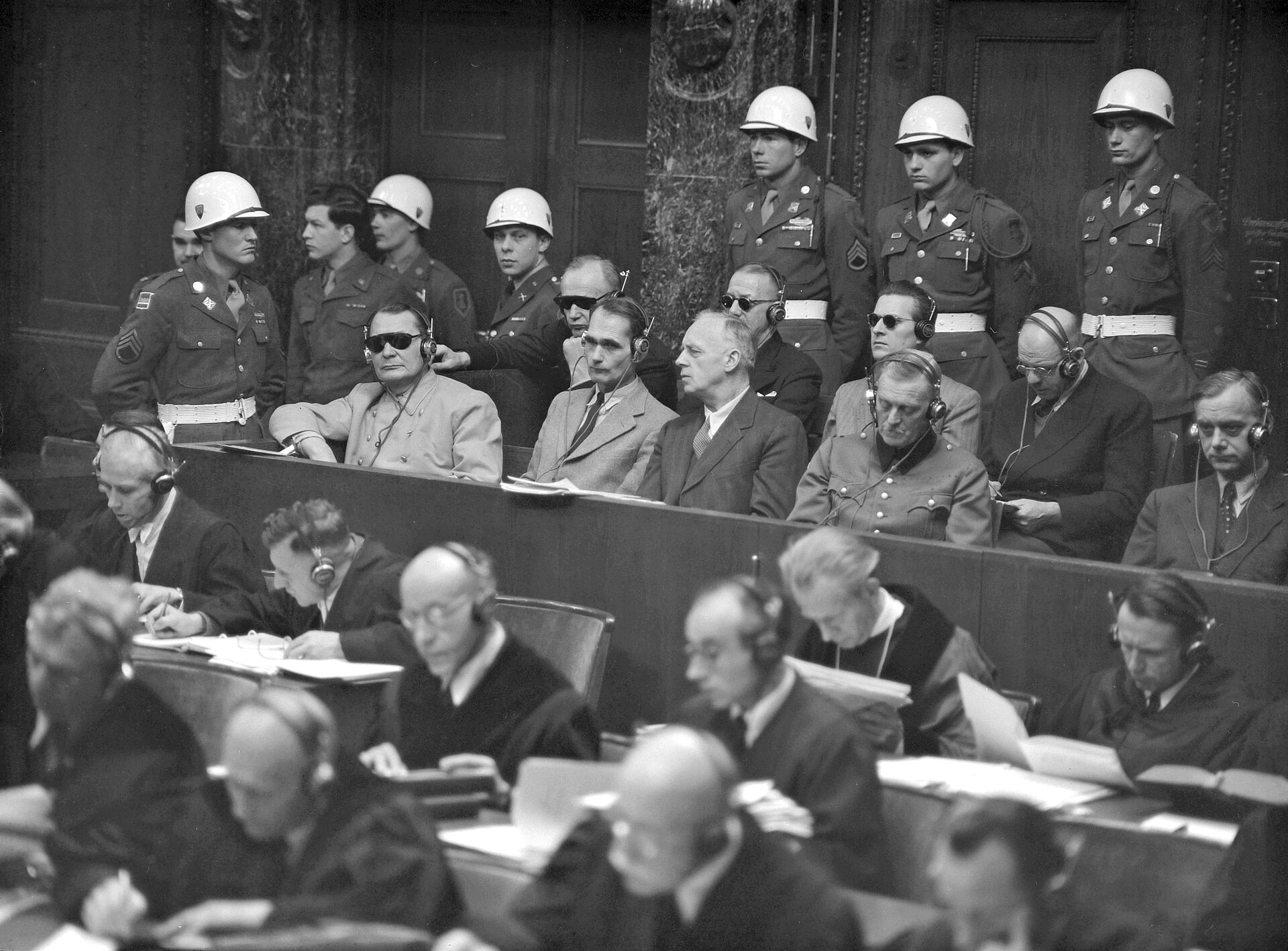
Nuremberg succession processes 1946–1949: Digitization projects started
Immediately after the Nuremberg trials against the war criminals of the Second World War, the so-called Nuremberg succession processes started. In contrast to the main war criminal proceedings before an International Court of Justice, these proceedings, which took place in Nuremberg between 1946 and 1949, were negotiated exclusively before American military courts. 185 senior lawyers, medical professionals, industrialists, SS and police leaders, military, civil servants and diplomats were charged in a total of 12 trials. The processes showed to what extent the German leadership layer had contributed to the power system of the Nazi rule of violence. Of the 185 defendants, 24 received the death penalty, 20 were sentenced to life imprisonment, 98 received several years of imprisonment. 35 of the accused were acquitted. In the 1950s, pardons led to all convicted NS criminals being released from custody until 1957. Of the 24 death sentences, 13 were actually executed. New standards in the scientific work-up of the Nuremberg succession processes Over the course of the processes, approximately 2.5 million sheets of process files were produced, which are stored in the original state archive in Nuremberg: statements by witnesses, indictments, stenographic records, defence documents, interrogation protocols and other official and private documents. With the project “Digital Nuremberg Military Tribunals” (DigiNMT), BAdW, FAU and the Directorate-General of the Bavarian State
Read more→

14.3.-4.4.2023: Cannon bells. Bell seizure and restoration in Bavaria 1917–1922
The 14th. March 2023 became the small exhibition “Glocken zu Kanonen. Bell seizure and restoration in Bavaria 1917–1922” opened in the Bavarian Main State Archive. The exhibition was developed as part of the current archiving training for the 3rd level of qualifications at the University of Applied Sciences in Bavaria (HföD). Bells have shaped our everyday life as a clock generator for centuries. In their ornamental and sound art, they testify not only to the worship of God and the saints, but also to the craftsmen of their founders. In the First World War, about one third of the Bavarian bells were crushed and melted to cover the metal requirements of the armaments industry. Despite these massive losses, the “Glockenland Bayern” succeeded better than other countries of the German Reich to preserve its bell stock as far as possible and in particular to preserve historical bells from destruction. The exhibition is dedicated to the processes and actors of bell events during the First World War in Bavaria. Finally, the question of state compensation or restoration of bells after the end of the war. The exhibits originate mainly from the collections of the Bavarian Main State Archives, the city archives Augsburg and Rosenheim have provided digitalisate. accompanying exhibition is a leaflet available on this page under 'Family files' and under https://www.gda.bayern.de/publikationen/lehrausstellungen-der-bayerischen-archivschule/ availabl
Read more→

27.2.-26.5.2023: Vaccines in Bavaria at the beginning of 20. Century
The small teaching exhibition "Impfgegner in Bavaria at the beginning of the 20th century from 27 February to 26 May in the State Archive Munich. Kevin Beesk's exhibition was launched as part of the current preparation service 2021/2024 for the start in the 3rd. Qualification level of the field of education and science, specialized focus on archives at the University of Applied Sciences in Bavaria, was developed from the 7th January to 7 Feburar in the Bavarian Main State Archive. Vaccinary scepticism and vaccination are not phenomena of the corona pandemic and associated discussions about vaccines or a general vaccination obligation. There have been reservations and resistance to vaccinations since the end of the 19th century. Century. The impfgegneric movement in the German Reich experienced a spy supply, especially since the introduction of a general vaccination obligation against the Pocken 1874. The small exhibition takes a look at the impfgegneric movement, its activity in Bavaria and main actors at the beginning of the 20th century. The nearly 30 exhibits originate mainly from the collections of the Bavarian State Archives. The Bayerische Staatsbibliothek and the German Medical History Museum in Ingolstadt have provided digitalisate. accompanying the exhibition is a booklet available on this page under 'Family' files and under Publications available for download. Digitalized archives for exhibition: Exhibition 23: BayHStA, MK 16653: Dr. Heinrich Molena
Read more→