

Event series "DREI um DREI"
In spring 2020, the State Archive Nuremberg had to withdraw from its buildings in the Archivstraße 17 in Nuremberg due to the necessary renovation. It'll take time to move back. Common formats of public relations such as archive tours or exhibitions cannot be offered during the outsourcing. The State Archive Nuremberg has been taking place since 30th. November 2023 with a new lecture format in memory: Under the title “Three Around Three”, archivists in a colourful mix of the rich archives of the State Archives show surprising and precious, eye-catching and consequences-rich, everyday and rare. Three topics are presented each on the third, starting at 3:00 in the afternoon. Three events per year are planned. On the occasion of the introduction of the reformation in Nuremberg 500 years ago, Dr. Christian Kruse, Dr. Daniela Palzer and Dr. Daniel Burger from the State Archive Nuremberg will present on 20th. March original source texts. The focus is on: Advice on “the right and most notable main thrust of our faith and Christian preaching”. The Council and the Nuremberg religious talk of March 1525. They “should, however, be generously ruen with irem Bapisthic measurements”. Nuremberg is evangelical. Determine “how to keep [...] with the void vnd Ceremonien”. The Confessio Augustana and the Brandenburg-Nürnberg church order. The next lectures in 2025: Thursday 20th March 2025, at 3 pm at the Sophien Hall Thursday Novem
Read more→
Cooperation of the State Archives of Bavaria with the Arolsen Archives
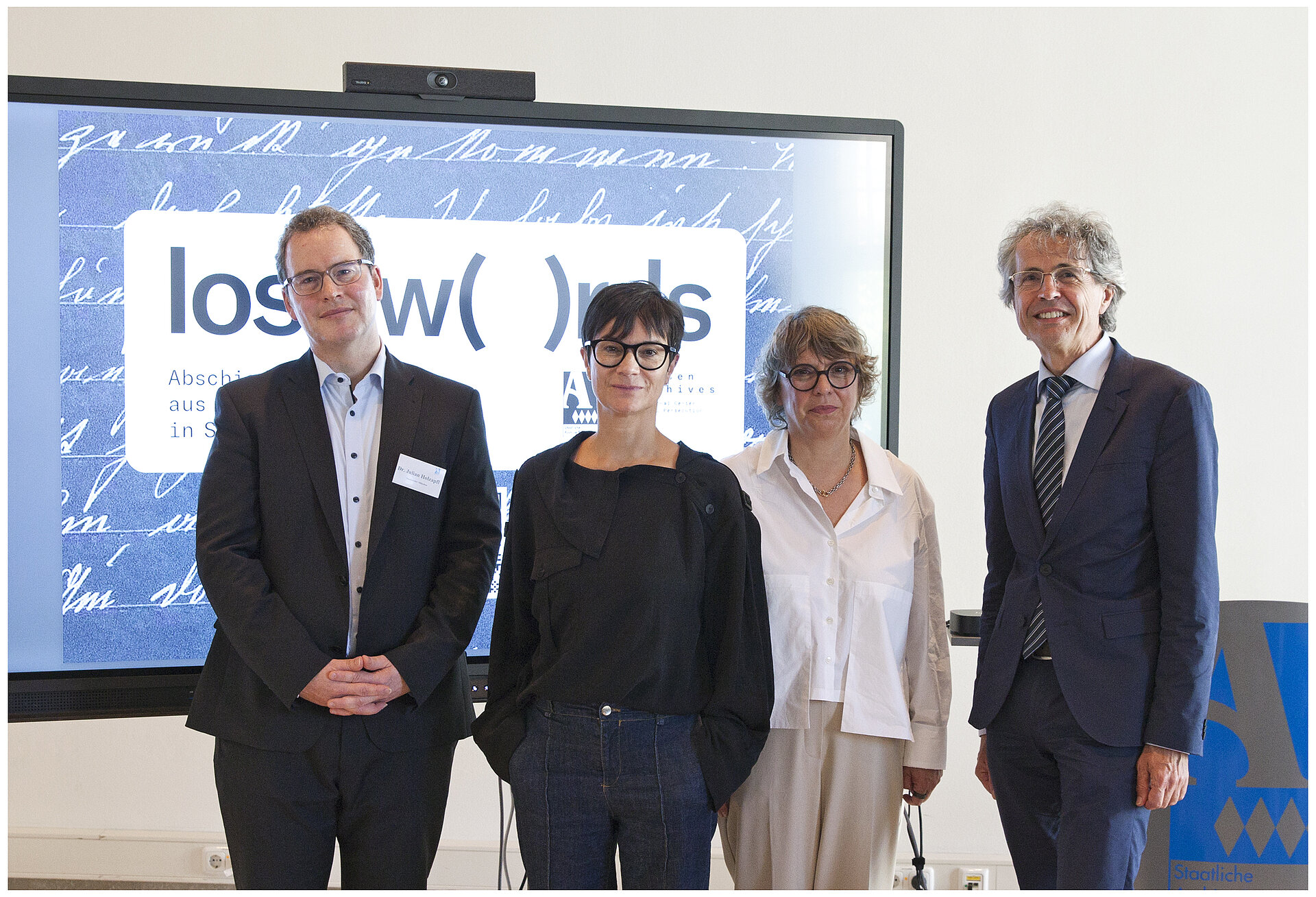
The detention centre in Munich-Stadelheim acted as a “central detention centre” in the Nazi justice system and is one of the main places of the Nazi injustice in Munich with over 1000 known executions by 1945. The 844 so-called execution files of the JVA München-Stadelheim, which have been stored in the State Archive Munich since 1975, contain more than 50 unsubscribed letters from execution candidates to particularly close persons. The then prison administration and the detention centres held these letters back. The execution files are freely accessible to all scientific and private research projects, the distortion information is available online via the Finder database of the State Archives of Bavaria. In order to take account of the particular importance which the execution files or the suicide letters of the executed still have, as sources of history for the NS injustice, but also as personal evidence for the descendants of the executed, the files were systematically checked, digitized and the original letters mentioned were identified. The Arolsen Archives are the international centre of Nazi persecution with the world's most comprehensive archive on the victims and survivors of National Socialism. They specialize in tracking the biographical traces of NS victims up to their relatives living today. In the case of execution victims from Munich-Stadelheim, these traces lead not only to German, but above all to Polish and French families. The aim of th
Read more→
Archives of the Free State of Bavaria for “Reparation” National Socialist Unright
‘reparation files’ are important sources of historical research due to the detailed biographical information and the attached evidence. On the 7th Day of Provenance Research on the 9th April 2025 show the Bavarian State Archives with a small showcase presentation in the Bavarian Main State Archive, which provides insights into persecution skills based on this file group. The Day of Provenance Research conveys the social and scientific relevance of this research area and takes place every year on the second Wednesday in April. In the example of the persecution fate of the Jewish woman Hedwig Bobelle during the NS period, it is shown which evaluation possibilities for example offer the compensation files. The Compensation Act contains applications submitted by Hedwig Bobelle to the Bavarian State Compensation Office from 1954. These requests for damage to freedom, property and property as well as professional and economic progress illustrate, among other things, the handling of the recovery authorities with the formerly persecuted. In many cases, detailed evidence was required which were hardly to be provided, since almost everything had to be left behind on the flight, in detention and other war-related fates. It is also clear that not only cultural goods such as paintings, musical instruments or valuable books have been robbed. Everyday objects, from personal memorabilia to furnishings, were also deprived of Nazi persecution. Files such as those of Hedwig Bobelle
Read more→