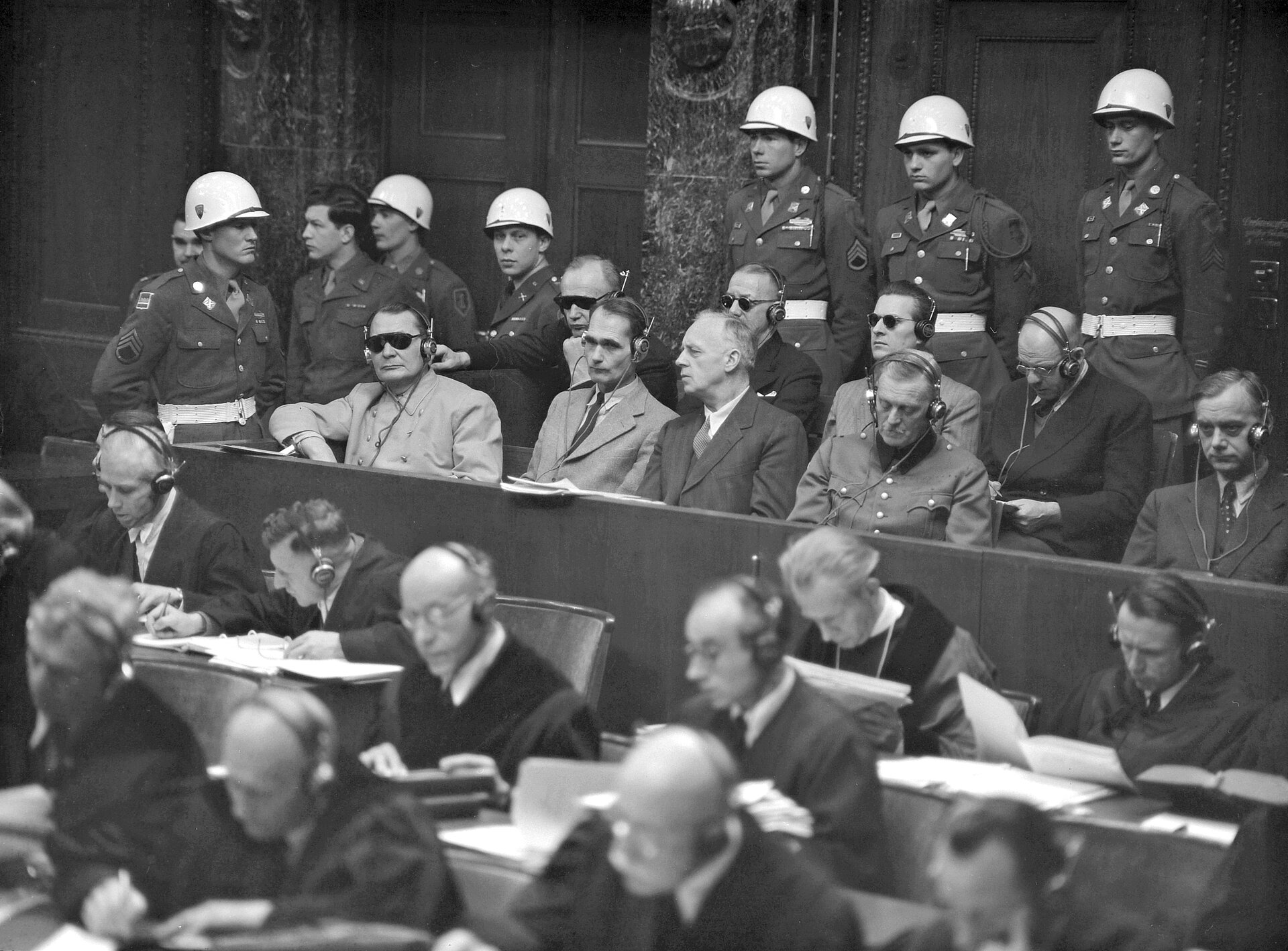
Immediately after the Nuremberg trials against the war criminals of the Second World War, the so-called Nuremberg succession processes started. In contrast to the main war criminal proceedings before an International Court of Justice, these proceedings, which took place in Nuremberg between 1946 and 1949, were negotiated exclusively before American military courts. 185 senior lawyers, medical professionals, industrialists, SS and police leaders, military, civil servants and diplomats were charged in a total of 12 trials. The processes showed to what extent the German leadership layer had contributed to the power system of the Nazi rule of violence. Of the 185 defendants, 24 received the death penalty, 20 were sentenced to life imprisonment, 98 received several years of imprisonment. 35 of the accused were acquitted. In the 1950s, pardons led to all convicted NS criminals being released from custody until 1957. Of the 24 death sentences, 13 were actually executed.
New standards in the scientific work-up of the Nuremberg succession processes
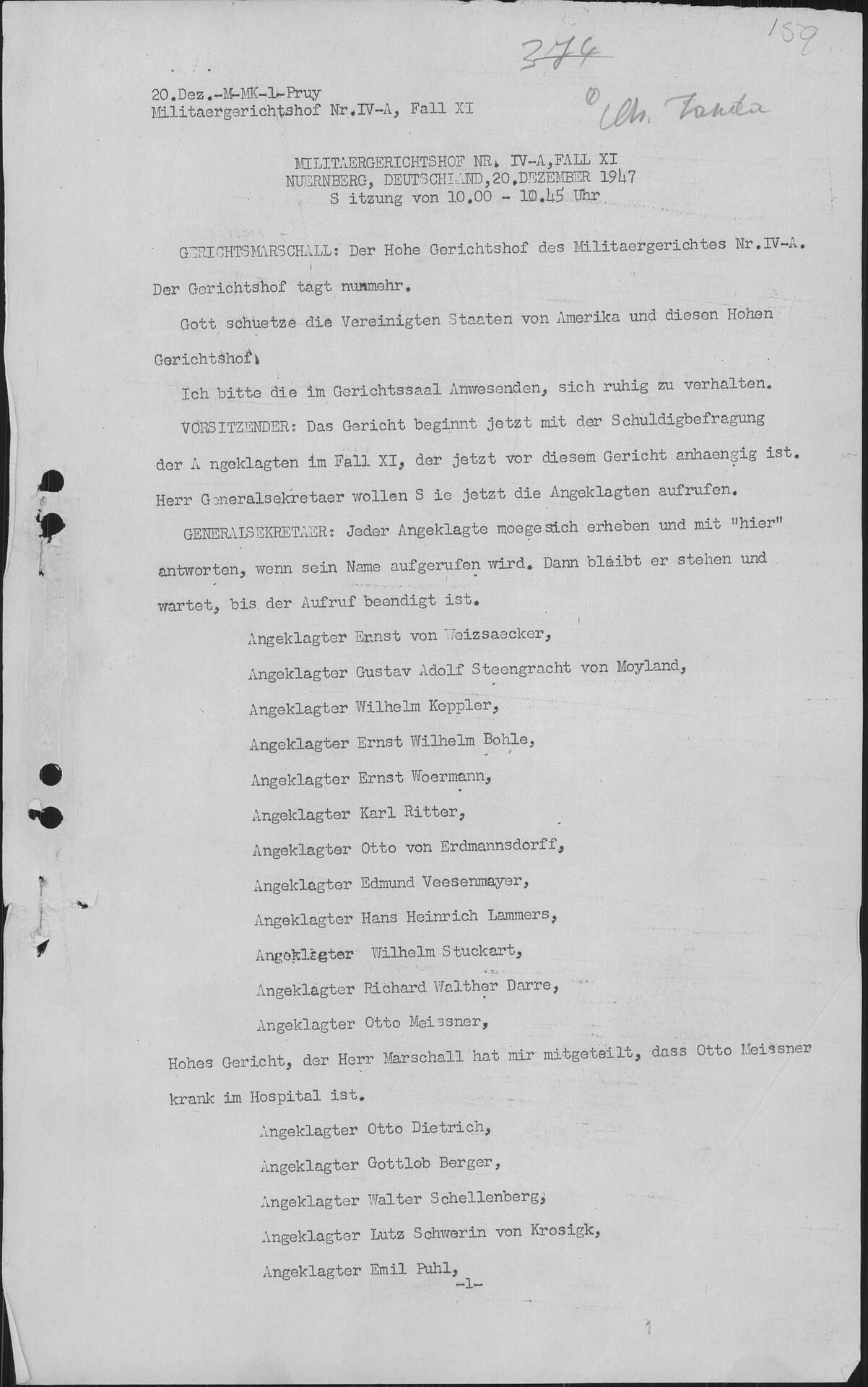
Over the course of the processes, approximately 2.5 million sheets of process files were produced, which are stored in the original state archive in Nuremberg: statements by witnesses, indictments, stenographic records, defence documents, interrogation protocols and other official and private documents. With the project “Digital Nuremberg Military Tribunals” (DigiNMT), BAdW, FAU and the Directorate-General of the Bavarian State Archives enable the scientific work-up of the Nuremberg succession processes. The aim is to fully digitize, develop structured and make accessible on an interactive platform globally the process files that are threatened by poor paper quality. This contributes significantly to the conservation and preservation of the original documents.
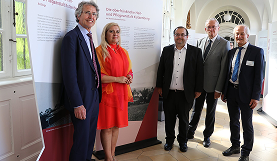
“DigiNMT is an innovative lighthouse project for digital humanities,” says Christoph Safferling, owner of the FAU Chair of Criminal Law, Criminal Procedure Law, International Criminal Law and International Law and one of the project leaders. “The aim of the project is to enable researchers and interested parties to systematically view and analyze the whole of the documents in an interdisciplinary manner.” By combining artificial intelligence (AI) and natural language processing (NLP) with legal and historical approaches, the previously fragmented research on the succession processes is to be given a new basis. “The Digital Humanities are continuously strengthened as a research focus of BAdW. I am pleased that this project can help to significantly promote legal and historical research into the Nuremberg follow-up processes,” says Academy President Markus Schwaiger.
Research data development
The project focuses on the digital presentation of the historical files, which are prepared in three stages of development: from digitization to confiscation to bilingual commentary.
“With the digital provision of this enormous database complex, research and the public are opening up new and significantly improved possibilities of access and evaluation,” says Director-General Bernhard Grau (Directorate-General of the Bavarian State Archives).
With the help of AI-based analyses, new findings on biographical networks, legal accounting models and the dynamic processes of post-war justice are to be gained. Particularly innovative is the possibility to create interactive visualizations that make complex relationships between actors, evidence and legal concepts visible.
Importance of international research
The digital platform aims to provide open access to researchers around the world and inspire new research questions. “The Nuremberg succession processes not only mark a legal milestone but also historically a milestone,” explains Simone Derix, owner of the FAU Chair for Latest History and Time History and also project manager. “With DigiNMT, we create the basis for analysing their importance for the development of international criminal law and the work-up of Nazi crimes at a new depth. ‘
The project follows the FAIR and CARE principles – thus ensuring the traceability, interoperability and reusability of the data, but also taking into account ethical and collective responsibility aspects. The data architecture also ensures the connectivity for future research projects and enables cooperation with international institutions.
Project “Digital Nuremberg Military Tribunals” (DigiNMT)
Duration: 2024 to 2026
Financing: Bavarian Academy of Sciences
Project partner: Bavarian Academy of Sciences, Friedrich-Alexander-Universität Erlangen-Nürnberg, Directorate-General of the State Archives of Bavaria, International Academy of Nuremberg Principles, State Archive Nuremberg
Contact:
Prof. Dr. Christoph Safferling
Friedrich-Alexander-Universität Erlangen-Nürnberg | Department of Law
E-mail: Str1@fau.de
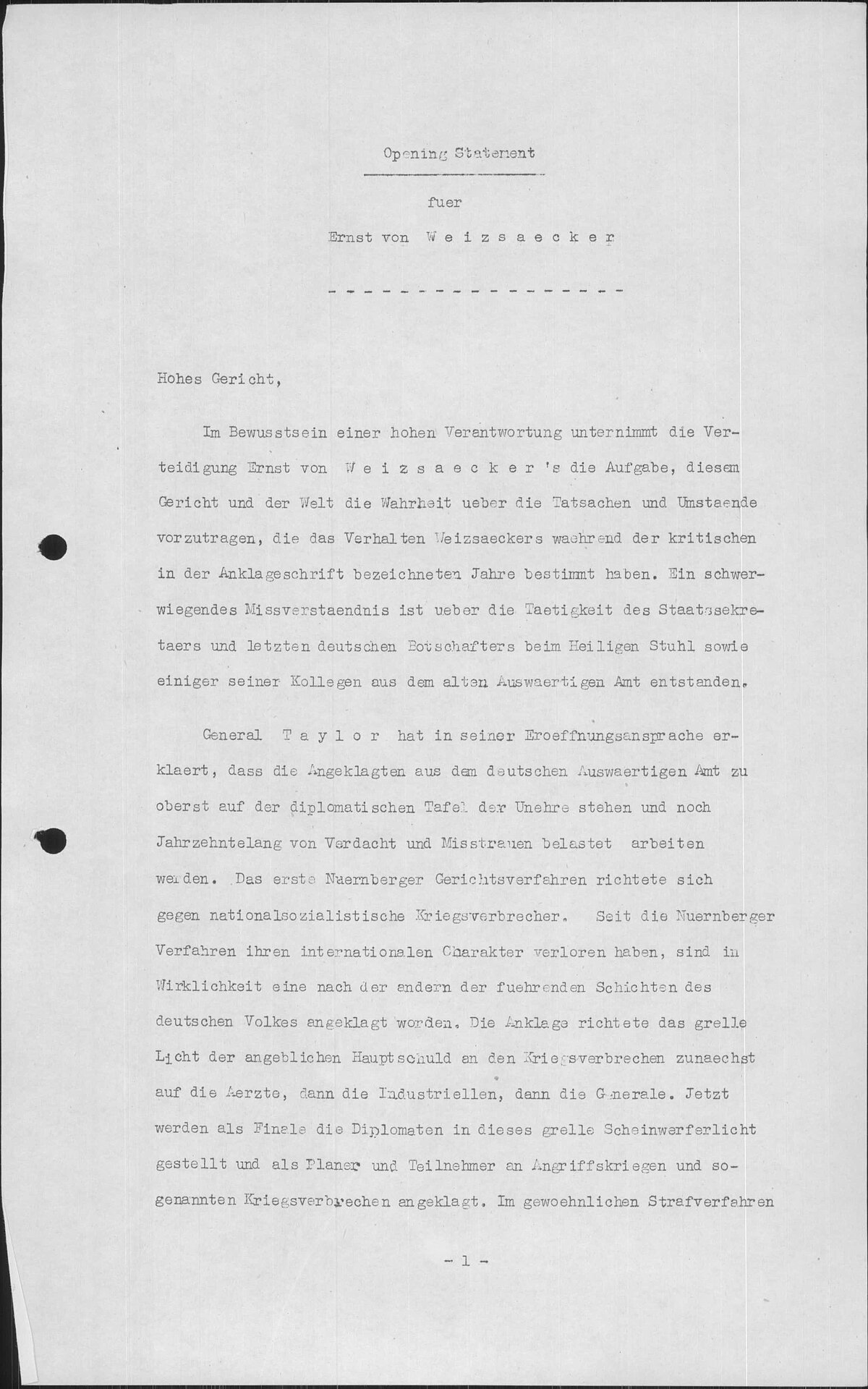
In order to launch the digitalization project, the Bavarian State Archives are presenting the digitalisates of the process documents of the Nuremberg succession process Case 11 (also known as “Wilhelmstraße Process”); ‘Ministries Trial’ is available through their finder database. The process lasting from the end of 1947 to April 1949 is, in addition to the Nuremberg Main War Crime Process ("International Military Tribunal"), the most extensive process of the thirteen Nuremberg trials and was directed against the "second series" of the NS regime, including several state secretaries, high SS leaders and economic managers.
You will find the Digitalisate on Case 11 in finder database of the Bavarian State Archives.
Figures
1. Photography accused Nuremberg trials, recording Raymond D'Addario, 1946, municipal archive Nuremberg 65/I Nr. A65-I-RA-12.
Two. Stenographic Protocol 20.12.1947 pp. 1 - 15, State Archive Nuremberg, Nuremberg Processes, KV Processes, Case 11 (= Weizsäcker Process) A 1.
3. Opening Statement for Ernst von Weizsäcker von Warren E. Magee and Hellmut Becker from June 1948, State Archive Nuremberg, Nuremberg Processes, KV Processes, Case 11 (= Weizsäcker Process) X1.
Created on 27.01.2025