

Use and advice after prior registration
For organizational reasons, use and consultation in the Landshut State Archive is only possible after pre-registration. The pre-registration should be either directly in the reading room (0871/92328-31) or by e-mail (poststelle@stala.bayern.de). For the timely submission of archiving materials, we recommend to pre-order them.
In the reading room of the State Archive Landshut under certain conditions digital photographs may also be created from archives. This requires the signing of a corresponding declaration and compliance with the rules laid down therein. Certain documents are for reasons of data or copyright protection or for conservation reasons not permitted for self-handed photographing, in particular:
- Archives whose maturity date is less than 100 years (exception: basic tax catastrophe)
- Archives of which digitalisates already exist
- Official books and bound files that cannot be opened to 120° without any problems
- Archives with mechanical pre-damages or with overformat
General information for the use of the State Archive Landshut can also be found in the Use notes.
Head: Archive Director Dr. Thomas Paringer
Sprengel: Government district Niederbayern
Stocks:
- Landshut and Straubing, Adelsarchive (including Ering, Kronwinkl, Moos).
- The Bayerische Hauptstaatsarchiv is responsible for the former Reichsstands Hochstift Passau and Grafschaft Ortenburg in Lower Bavaria as well as for the repealed mediate monasteries and pens of this space.
- State central and lower authorities as well as courts in the Lower Bavarian government district from the beginning of the 19th Century.
Volume: 21.018 lfm. with approximately 3.01 million archive units (as at 31. December 2024)
Transport:
By bus from central station to Kennedyplatz stop (lines 3, 6, 9, 12) or from the old town to Schlachthofstraße stop (line 11).
10-15 minutes walk from the railway station.
Access by car:
Coming from the A 92 motorway towards Deggendorf: exit 15 (Landshut-Essenbach), follow B 15 (direction Landshut) after the local sign at the traffic lights straight towards downtown, turn left at the next traffic light into the Schlachthofstraße
Coming from the A 92 motorway towards Munich: exit 12 (Landshut-West), on the state road right to Landshut (about 5 km), after the local entrance sign Landshut at the seventh traffic light turn right into the Schlachthofstraße.
Access to the Benützerparks via Schlachthofstraße or Franz-Seiff-Straße (in each case ringing at the barrier).
Virtual reading room:
Click here to access the virtual reading room of the Bavarian State Archives.
The State Archive Landshut is the state authority responsible for all questions of archives in the Lower Bavarian government district. As a historical detonator, between 1507 and 1799/1802 in the Duchy or Kurfürstentum Bayern is assigned pensioner offices Landshut and Straubing. The modern Sprengel is built in 1837 by the Lower Bavarian government district in its current expansion, modified by the territorial reform of 1972, with its predecessors, the districts in today's Lower Bavaria (since 1808).
At the time (December 31, 2011), the holdings of the State Archives comprise over 2.6 million archiving units (AE) in the amount of approximately 18 000 running meters (lfm), including approximately 11,300 documents, more than 2.5 million archiving books and files, and approximately 10,000 cards and plans. The modern stocks are continuously supplemented by the levies of authorities, courts and other public bodies of the Free State of Bavaria and by local federal authorities in the field of competence.
The use depends on the usage order for the state archives of Bavaria of 16th. January 1990 (GVBl p. 6) in the valid version, in which the use fees are also regulated. Special arrangements exist for various individual stocks and deposits.
The castle Trausnitz, built from 1204 above the city of Landshut, was used for Duke Otto II of Bavaria (1231–1253) and after the division of 1255 for the line Niederbayern as a residence. Among the dukes of the line Bayern-Landshut, which originated from the division of 1392, the 15th century Archives (“Briefgebogene”) on the Trausnitz Castle and in the Zweitresidenz to Burghausen can be detected, which also captures the writings of the part-duchy of Bavaria-Ingolstadt from Ingolstadt and Neuburg a.d. Donau. After the extinction of the Landshuter Line (1503) and the subsequent Landshuter Succession War from 1505, they were divided into legal successors, the now reunited Duchy of Bavaria and the Principality of Pfalz-Neuburg (now in the Bavarian Main State Archive in Munich). After that, rooms of the castle have been shown to serve as an old register since 1609 of the ducal pension office to Landshut. From 1753, the Kurfürstliche Hofkammer in Munich set up a depot for the revised accounts of Upper Bavaria and Lower Bavaria as well as the Oberpfalz; from 1799 the Spiritual Council followed the series of the Old Bavarian church bills. These special registries formed the foundation for a 19th All the old Bavarian, sometimes also Swabian and Franconian invoices, the “Rechnungsarchiv” which has been a so-called decimation since 1834 (restoration only every tenth year from approx. 1550, partly earlier) was subjected. In 1805 the rule of the 1802 dissolved government of Landshut is also mentioned as being located on the castle. Until 1928, the registrators there, then archive directors, worked out at the same time as the office of the Schlosspfleger.
From the outset, in addition to the relevant levies of Lower Bavarian offices and authorities for a longer period of time, extensive “remd stocks” of central and Upper Bavarian authorities were also transferred to the archive at Trausnitz, which at the same time as the site of the Reichsarchiv and the Archive Conservatory and/or District Archives Munich served. However, these stocks were re-drawn in stages until the end of the 1960s. The utterly confusing stock structure was set up in “repertories” (delivery) “directs”. In order to make it accessible, Kreisarchivar Josef Edmund Jörg (1866–1901) has created a local catalogue and a catalogue of articles in print form (Jörgscher Zettelkatalog).
In 1809, the depot at Trausnitz was incorporated into the Bavarian archive administration and received the name “Archivkonservatorium” in 1812. In 1875, like all regional Bavarian state archives, it was renamed to “Landshut State Archive” and in 1921.
A large fire at the Trausnitz Castle on October 21, 1961 meant the loss of about 4000 volumes for the state archive (particularly parts of the letter log selection and logs and files of the Passau High Foundation). More 4000 volumes and files could be restored. In the course of the restoration of the burnt-out principal building of the castle, the State Archive, which was able to resume its activities in 1965, received the “most modern archive facility in an old building” (subdivision of three floors in seven, steel halls, heating, elevator). The reference to this magazine gave rise to the long-overdue restructuring of the stocks in Landshut and in the entire Old Bavarian archive sector, which was now attacked by Walter Jaroschka. It had resulted in a comprehensive inventory cleaning with the Bavarian Main State Archives and the State Archives Munich and Amberg. In the context of this inventory cleaning, the State Archive Landshut received extensive written documents from Munich and Amberg in several large volumes from 1978 to 1985. Provenance-pure funds are formed or integrated into such funds. For the first time, the state archive has been given a territorial and functionally unique competence and a stock structure based on the provenance principle. Due to the extensive administrative charges of the last decades of the 20th century (on average about 200–300 meters per year), the space capacity of the state archive on the castle, where further expansion is not possible, was exhausted. The decision for a new building was therefore taken. Planning began in the early 1990s, but could only be realized by 2016 with major budgetary delays.
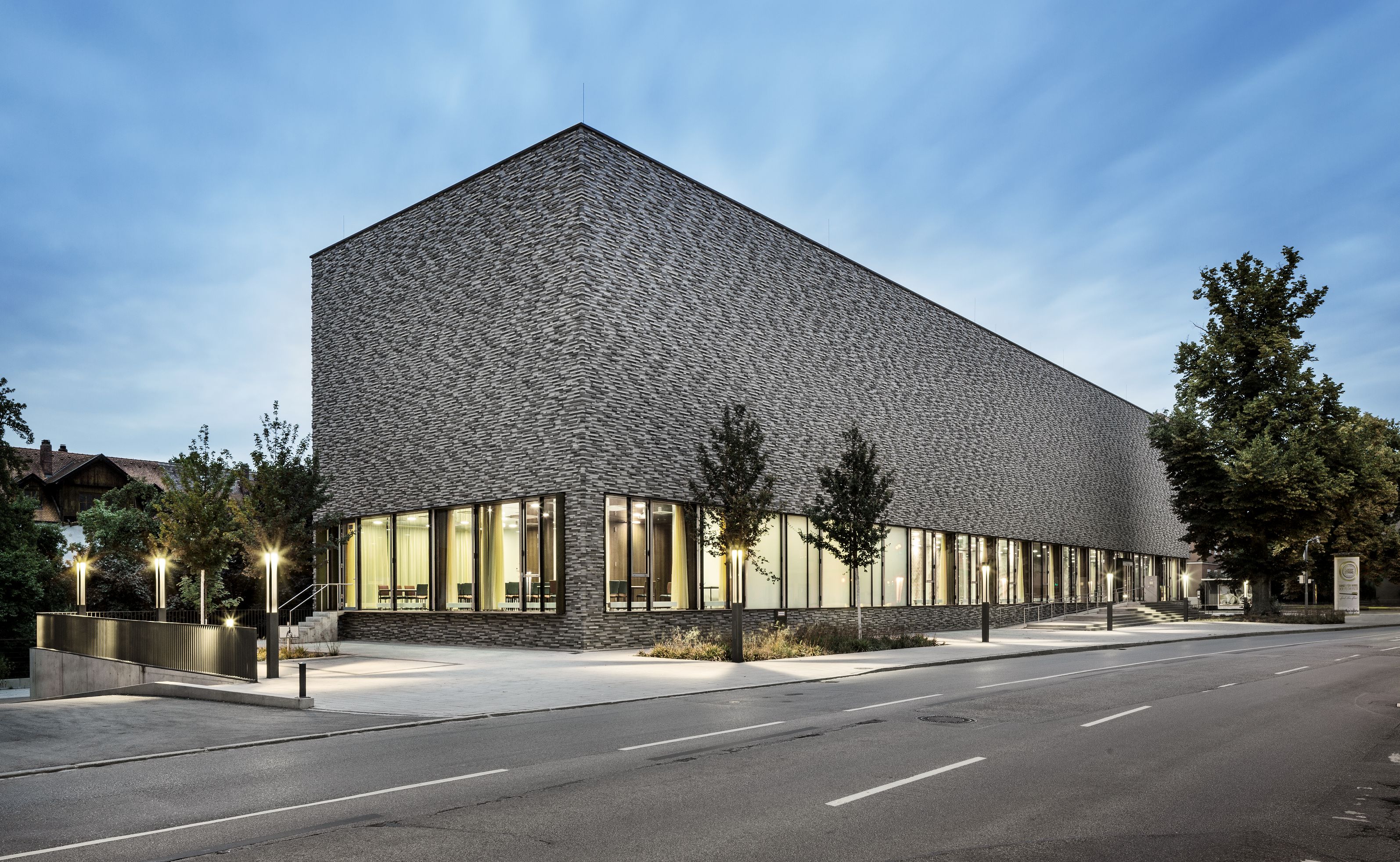
In 2016, the State Archive abandoned its location on the Trausnitz Castle and united all its stocks in a new building in Schlachhofstraße 10. This building is located in the middle of the city, is well accessible for visitors and meets all the requirements of a modern archive. In addition to the administrative and generous public areas with reading room, lecture room and exhibition space, there are also magazines that offer enough space for the archives in the coming decades.
The formation of stocks is carried out according to the principle of provenance, i.e. the authorising material selected according to certain assessment principles is separated in the archive by registrature formers and (possibly in the respective register context). The structure of stocks in the archive thus reflects the state administration of the explosive. Insofar as original funds are still located in levies or in collections only formed in the archives, they are removed from them and restored in accordance with provenance. Any archive research will therefore have to be based on the objective and spatial competence of one or more authorities for a specific question. However, since the knowledge of the often complicated administrative structures and their historical changes cannot easily be assumed, all researchers from the archives will be given careful advice so that they can find the required documents as quickly as possible.
The library contains about 34,000 volumes. Collection areas are in particular archives, regional and local history, legal and administrative history as well as official pages. The "Deggendorfer Donaubote" and the "Deggendorfer Zeitung" (1913-1964), the "Bayerische Ostmark" with various local editions (1933-1942), the "Isarpost" with local editions (1946-1955) and the "Landshuter Zeitung" (the two recent vintages each).
Publications about the Landshut State Archives can be found here.
You can find the virtual tour of the State Archives here: Start tour
Address
Schlachthofstraße 10, 84034 Landshut
Contact
Tel. 0871/92328-0 Fax 0871/92328-8 E-Mail: poststelle@stala.bayern.de
Management
Archiv director Dr. Thomas Paringer